Forgiving Love
- Feb 6
- 3 min read

Forgiveness is one of those words that sounds easy until you actually have to live it. We love the idea of forgiving... until someone says something that cuts deep, breaks our trust, or wounds us in a way that lingers longer than we expected. Forgiveness isn’t dramatic or public most of the time. It happens quietly, long after the moment has passed, and sometimes without an apology ever coming.
I’m quick to forgive, but I will never forget, and that distinction matters. Forgiving doesn’t require forgetting. Love doesn’t pretend the hurt didn’t happen or erase what was done. Instead, love chooses release. Scripture tells us that love “keeps no record of being wronged.” 1 Corinthians 13:5 not because the wrong didn’t matter, but because love refuses to let it keep control. Choosing not to forgive someone doesn’t just affect them, it takes hold of you. Unforgiveness has a way of settling in slowly, like a cancer, eating away at you day by day. It steals peace, shapes your thoughts, hardens your heart, and quietly gives power to the very thing that hurt you. Before you realize it, the pain is still winning long after the moment has passed.
A powerful example of forgiving love—especially in a time when forgiveness feels nearly unimaginable, is Erika Kirk, who chose to forgive the man who murdered her husband. Her forgiveness didn’t mean what he did was right. It didn’t minimize the loss or pretend the tragedy didn’t happen. And it certainly didn’t mean she forgot. What it did mean was freedom. Forgiving love takes a special kind of strength, one I believe we are only given by God. It isn’t natural. Erika’s forgiveness wasn’t about excusing evil, it was about refusing to let evil define the rest of her life. If she had remained bitter and held onto resentment, the murder wouldn’t have ended with her husband’s life... it would have continued to have control over hers, without her even realizing it.
Jesus modeled this kind of forgiving love again and again. Toward friends who abandoned Him. Toward people who misunderstood Him. Toward those who harmed Him. His forgiveness wasn’t rooted in others’ behavior—it was rooted in obedience, compassion, and trust in the Father. And sometimes, forgiving love is something we need to extend to ourselves. For the words we wish we hadn’t said. For staying too long. For not knowing better at the time. Love that forgives makes room for grace... not just for others, but for our own healing too.
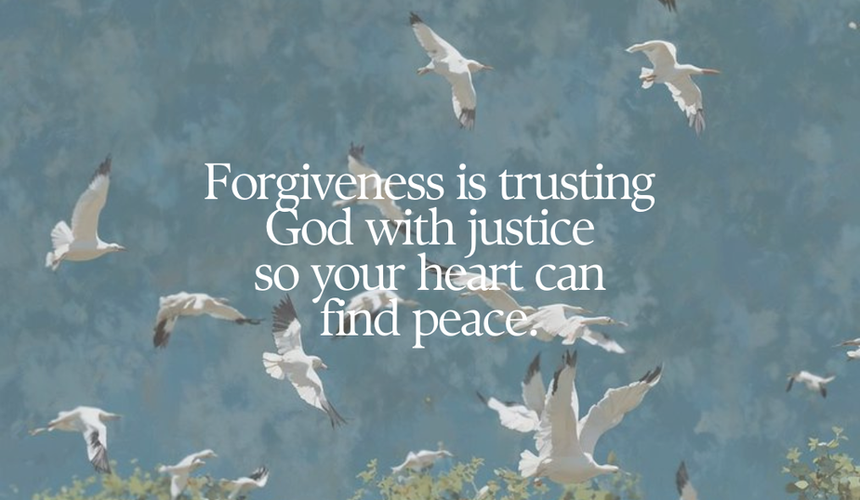
Forgiveness may not come instantly. It may take prayer, boundaries, tears, and time. But forgiving love always leads toward freedom. It doesn’t change the past, but it redeems the future. It’s love choosing peace over bitterness, healing over hardness, and faith over fear... placing our freedom back into God’s hands, where it belongs.
SHE Walks in Faith
Is there someone you can offer forgiveness to this week?
forgiving the friends who slowly drifted away without explanation
the family member who said something hurtful and never tried to make it right
the spouse who disappointed you
the coworker who took credit for your work
a leader who let you down when you needed support the most
🩷 Prayer
God, You see the hurts I carry—the ones I talk about and the ones I’ve buried deep in my heart. You know where forgiveness feels easy and where it feels impossible. Today, I ask You for the strength to forgive the way You forgive me. Help me release resentment, loosen the grip of bitterness, and choose freedom over control. Amen.